

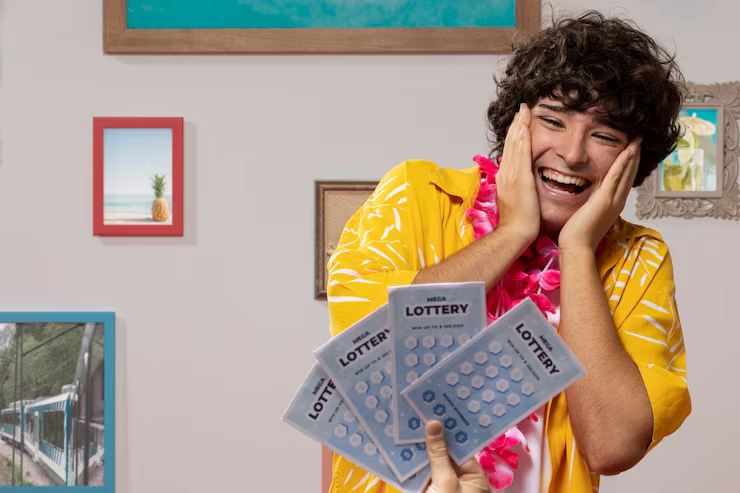
Bingo has always been more than just a game in the Philippines. For some, it recalls childhood memories of fiestas with neighbors shouting numbers into microphones. For others, it represents fundraisers at churches or lighthearted evenings with family. Today, bingo is also a symbol of the country’s evolving entertainment landscape, shaped by technology and law while still grounded in culture.
Online Bingo Games: A Familiar Game Goes Digital
In the past, playing bingo meant attending a community event, buying a card, and marking numbers with coins or pens. The experience was tangible, noisy, and deeply social. But the arrival of online bingo has transformed where and how people play.
Platforms like bigbunny and Ebingo demonstrate how tradition adapts to technology. These platforms keep the suspense and joy intact, while allowing players to join games with just a smartphone or laptop. What was once tied to a physical hall now unfolds in digital spaces, proving that tradition doesn’t vanish—it evolves.
Philippines Online Entertainment Trends: Togetherness Across Borders
Filipino entertainment has always been rooted in community. From karaoke contests to basketball games and weekend fiestas, people come together to enjoy collective experiences. Online entertainment extends this principle, especially in a country where millions live and work abroad.
Online bingo allows an OFW in Dubai to join a game with family members in Davao, making digital platforms a new kind of “town plaza.” Instead of replacing culture, they serve as bridges that keep Filipinos connected no matter where they are.
Gambling and Law: The Push and Pull of Regulation
Games of chance have always existed alongside laws that attempt to regulate them. Ancient Roman dice games were technically illegal, but archaeological evidence shows they thrived anyway. In Europe, monarchs banned gambling during economic struggles but relied on lotteries to fund state projects.
The Philippines has followed a similar path. When PAGCOR licensed online bingo in 2022, it didn’t mark the introduction of the game but rather a recognition of its cultural and economic role. Regulation ensured fairness, safety, and accountability, balancing public demand with responsible oversight.
Why Bingo Stays Relevant: The Science of Suspense
Neuroscience explains why bingo is as exciting today as it was generations ago. Each uncertain number release stimulates dopamine in the brain, creating a rewarding cycle of anticipation and suspense.
Psychology highlights another layer: the social bond. Humans crave belonging, and bingo creates collective joy—whether through applause in a hall or emojis in an online chatroom. The science is clear: bingo thrives because it satisfies both the thrill of chance and the need for connection.
Entertainment as Cultural Heritage
When archaeologists unearth dice, carved boards, or game tokens, they reveal that play has always been central to human societies. Games are not trivial—they are cultural practices that embody values of luck, skill, and community.
In the Philippines, bingo is deeply ingrained in local traditions. It appears at fiestas, fundraisers, and family gatherings, weaving itself into daily life. Its move online doesn’t strip it of meaning—it ensures that the game endures in a form that resonates with younger, digital-native generations.
The Future of Bingo in the Philippines
Looking ahead, the future of bingo may involve even more innovation: virtual reality halls, AI-personalized experiences, and global tournaments that unite thousands of players. Yet the heart of bingo will stay the same: suspense, laughter, and togetherness.
From lively barangay nights to live-streamed games on mobile screens, bingo reflects the Philippines’ ability to adapt tradition to modern realities. It shows that entertainment is not static—it evolves with culture, law, and technology.
For more on how bingo and online entertainment continue to shape Filipino life, Check the latest updates and stories.